
Gamified learning & development | B2B SaaS
Mobile feature | Game shop | 0 to 1
Challenge 🎯
Users could only complete company-assigned training games, which were fewer, older, and increasingly repetitive.
Goal 📔
Increase mobile app engagement by giving users more agency in their learning journey through gameplay.
Results 💹
Achieved a 20% increase in gameplay through expanded access to a broader range of game categories, leading to better knowledge acquisition and improved user exploration.
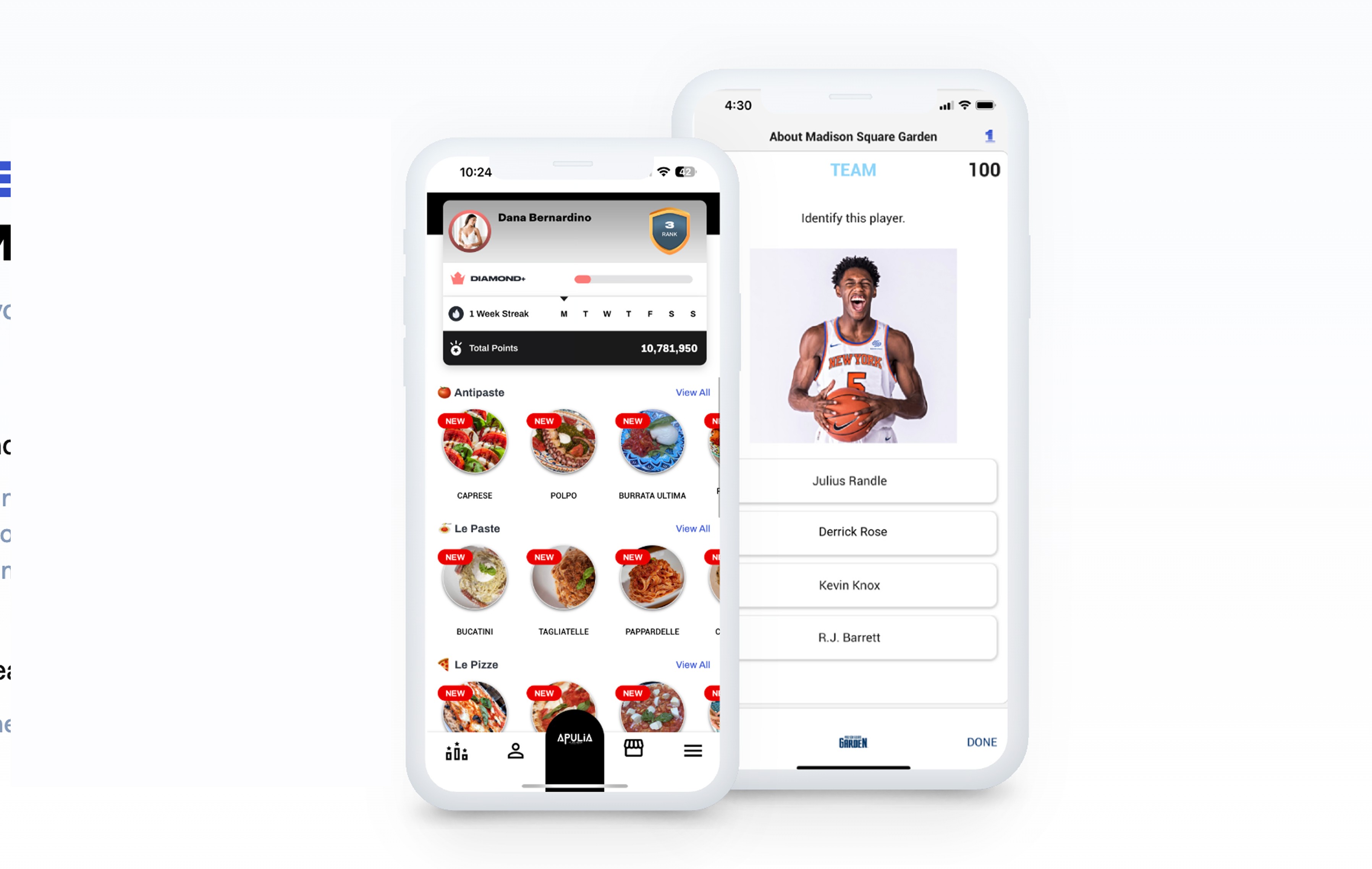
Let's dive in
Overview ⭕️
1Huddle
1Huddle is a coaching and development platform that uses quick-burst mobile games to more quickly and effectively educate, elevate, and energize your workforce — from frontline to full-time, in the United States.
My role
· Led end to end design from scratch
· UX research
· Conceptualization
· Hand off
· Stakeholder engagement
Deliverables
Wireframes, Mockups, Prototypes, Micro-interactions
Timeline
8 weeks
NDA
In compliance with NDA agreements, I have shared only the process.
Team
Collaborated with designers, BA, Product Manager, data analyst, dev team & CTOs. Documented the entire process and conversations on JIRA.
Understanding the "Problem"⁉️
The problem
The app only allowed users to play company-assigned training games —
Which were limited in variety, older, and repetitive.
User feedback and conversations surfaced a clear pattern: people wanted the freedom to explore games on their own and build their own learning profile.
User voices that shaped the problem definition
Roger wants to enhance his skills in his industry but finds the company-assigned games too limited. He has no freedom to choose what he plays or replay games.
Emily repeats the same training exercises over and over. She feels it limits her growth and motivation to upskill.
Identifying users needs 👨👩👧👦
Two primary users were identified for this design system:
Emily
Role: Waitress, 24, United States
A hardworking employee who feels she's hit a ceiling in her current role.
She's eager to explore new opportunities and expand her skillset, but the lack of varied training content is holding her back.
Career advancement is her primary goal.
Roger
Role: Hotel Staff, USA
Passionate about delivering exceptional service.
Actively seeks additional training during his own time across areas like customer service, event planning, and food & beverage management.
Wants to grow beyond what the company currently offers.
Alex
Role: Customer Service Representative
Assists customers with purchases and product information.
Desires access to more training resources to do his job better.
User Journey 🔍
Creating flows gave us a big picture of the feature and how users would interact with the system. (Based on team ideation)
The primary journey mapped out:
Push notification → Open app → Nudge toward Game Shop (bottom nav) → Tap Game Shop icon → Enter & verify mobile number → Select game categories → Explore Game Shop → Select and open a game → Play / Mark as favourite
Edge states mapped:
Game Shop turned off by company → user can message their manager to request access.
A secondary, more detailed flow mapped out the full explore experience:
browsing by category groups, keyword search by name or category, recently played list, favourites list, and the ability to contact a manager for support if access is restricted.
Wireframes 👉
This stage was about focusing on every user interaction, functionality, and exploring options for a seamless experience.
Onboarding
Designed to create a compelling first impression by communicating the value of entering the Game Shop and giving players a sense of progression from the start.
Sign-in
Recommended sign-up via mobile number (rather than just email) because the primary user base includes blue-collar workers who may not have a work email. This also makes it easier to track achievements and engagement even if users move to a new organisation.
Usability study findings 🧪
Conducted usability studies to refine wireframes and understand actual user experiences.
Most users found the flow intuitive and easy to navigate.
Users wanted the ability to add or update their phone number in their profile settings at any time — not just during onboarding.
One user was confused by the "Favourites" section appearing as a subsection within each game category, rather than as a standalone section.
Micro-interactions ⏯️
Added micro-interactions to improve engagement through system feedback.
Business "impact"
Increased engagement
The Game Shop significantly enhanced the player experience, resulting in a 20% increase in gameplay, engagement, and knowledge acquisition.
Higher retention
Employees gained the freedom to explore games beyond company-mandated content — fostering higher retention and engagement even as users transitioned between organisations, contributing to business expansion.
My "Learnings"
Interested in
working together?
Let's bring your vision to life

Get in contact with me